Online Practical Nursing Programs: How to Earn Your LPN License With Maximum Flexibility
Online practical nursing programs have made the LPN (Licensed Practical Nurse) credential more accessible than ever before for working adults, parents, and students who need maximum scheduling flexibility without sacrificing the quality of their nursing education. By delivering didactic coursework digitally and arranging clinical training at local healthcare facilities, these programs allow students to complete the foundational education for LPN licensure while managing work, family, and financial obligations that would make full-time on-campus attendance impossible. This guide explains exactly how online practical nursing programs work, what they cover, how to evaluate their quality, what the NCLEX-PN exam involves, and how to launch a rewarding LPN career after graduation.
What Is an Online Practical Nursing Program?
An online practical nursing program is a state board-approved training program that prepares students for LPN licensure (or LVN licensure in California and Texas) through a combination of online didactic coursework and in-person clinical training. The online component typically includes recorded lectures, virtual case studies, interactive simulations, pharmacology modules, and digital anatomy and physiology content delivered through a learning management system. Students access this content asynchronously — on their own schedule within weekly deadlines — making online practical nursing programs compatible with part-time work and family responsibilities in ways that traditional classroom-only programs often are not.
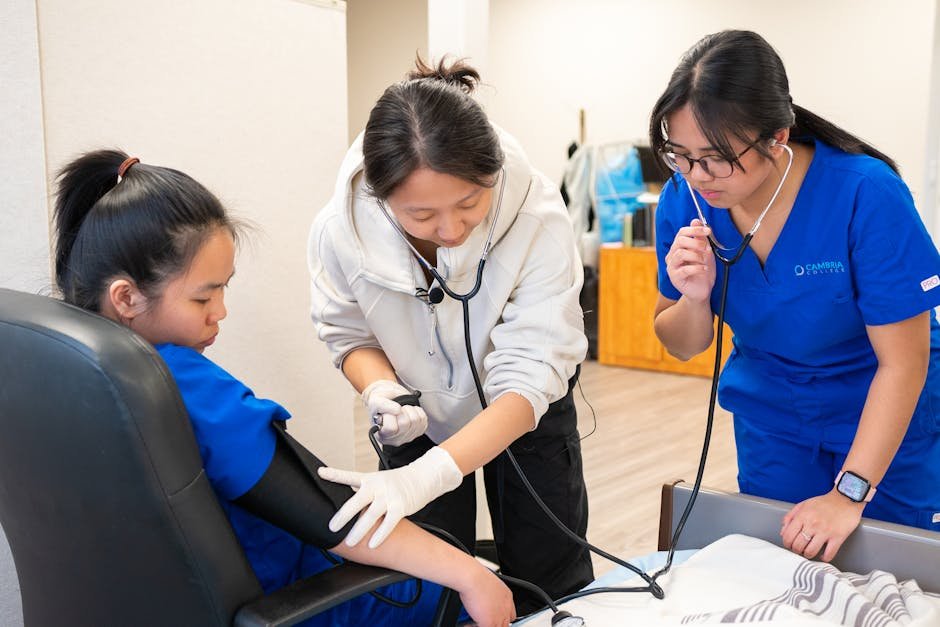
The in-person component — clinical practicum hours completed at local healthcare facilities under the supervision of a licensed nurse preceptor — is the non-negotiable hands-on element of practical nursing education. State boards of nursing require clinical hours as a condition of program approval, and they must be completed in person regardless of how much of the didactic curriculum is delivered online. Most online LPN programs either partner with healthcare facilities in students’ geographic areas to arrange placements or provide students with guidance and criteria for identifying approved sites independently.
Program Length and Structure
Online practical nursing programs typically take 12 to 18 months to complete, though some programs with accelerated scheduling may be completed in as few as nine months. The program is generally structured in sequential modules or semesters that build clinical knowledge progressively. Early modules focus on foundational sciences, nursing fundamentals, and basic clinical skills. Later modules address more complex patient care scenarios including medical-surgical conditions, maternal and newborn care, pediatric nursing, mental health care, and gerontological nursing. Most programs integrate clinical rotations throughout the program rather than reserving them for the final months, so students are simultaneously managing online coursework and attending clinical shifts at local facilities.
What Online LPN Programs Teach
The curriculum of an accredited online practical nursing program covers all the knowledge and skills assessed by the NCLEX-PN licensing examination. Core content areas include anatomy, physiology, and medical terminology; nursing fundamentals including patient communication, vital signs assessment, and basic care techniques; pharmacology and safe medication administration; medical-surgical nursing for common adult health conditions; maternal and newborn nursing; pediatric nursing fundamentals; mental health and psychiatric nursing concepts; geriatric care and long-term care nursing; nutrition and therapeutic dietary management; electronic health records and healthcare documentation; and HIPAA, healthcare law, and professional ethics. Clinical hours build on this didactic foundation, giving students supervised experience applying classroom knowledge to actual patient care.
Accreditation and State Board Approval: Non-Negotiable Requirements
Before enrolling in any online LPN program, verify two distinct credentials. First, confirm that the program is approved by the state board of nursing in the state where you plan to take the NCLEX-PN — state board approval is the legal requirement for examination eligibility. Second, check whether the program holds institutional accreditation from a recognized body such as ACEN (Accreditation Commission for Education in Nursing) or ABHES (Accrediting Bureau of Health Education Schools), or whether the institution itself holds regional accreditation. Accreditation signals that the program meets established educational quality standards and is recognized by employers and other educational institutions. Programs that lack both state board approval and institutional accreditation should be avoided entirely, as their graduates may be ineligible for licensure.
NCLEX-PN: The Gateway to LPN Licensure
After completing an approved online LPN program, graduates must pass the NCLEX-PN (National Council Licensure Examination for Practical Nurses) before they can practice as licensed nurses. The NCLEX-PN is a computerized adaptive test administered at Pearson VUE testing centers nationwide. It assesses clinical knowledge and judgment across domains including safe and effective care environment, health promotion and maintenance, psychosocial integrity, and physiological integrity. Quality online LPN programs integrate NCLEX-style practice questions throughout the curriculum to build exam readiness progressively. First-time pass rates — published by state boards of nursing — are one of the best indicators of a program’s educational quality. Look for programs with consistent first-time NCLEX-PN pass rates above 80 percent.
Finding Online Practical Nursing Programs
To find state-approved online LPN programs, start with your state board of nursing’s website, which maintains a searchable directory of all approved practical nursing programs. Filter by online or hybrid delivery to identify programs that offer significant online coursework. Community colleges in your area may offer hybrid LPN programs that deliver theory online and labs locally — these are often the most affordable and well-supported options available. Private career schools and national online nursing education companies also offer online LPN programs; verify state board approval and accreditation carefully before enrolling in any private program.
Career Outlook and Advancement for LPN Graduates
LPN/LVN employment is projected to grow 6 percent through 2033 according to the Bureau of Labor Statistics, with the median annual salary of approximately $59,000 reflecting stable demand across hospitals, long-term care, home health, and outpatient settings. Many LPNs choose to advance their education while working, completing LPN-to-RN bridge programs that lead to ADN or BSN credentials and full registered nurse licensure. The combination of an LPN credential earned through an online program, followed by a bridge program completed while working as an LPN, is one of the most cost-effective pathways to RN licensure available.
Conclusion
Online practical nursing programs make LPN licensure accessible for students who need the flexibility of digital learning alongside the hands-on clinical training that nursing demands. By delivering didactic content online and arranging clinical placements locally, these programs respect both the practical realities of adult learners’ lives and the uncompromising standards of nursing education. Verify state board approval, research NCLEX-PN pass rates, confirm clinical placement support, and choose an accredited program that will prepare you thoroughly for licensure and a nursing career built on genuine patient care competence.